Here is an example lesson plan that incorporates some of Volo’s learning style. It was created for a public school teacher in Salt Lake City who needed to use it mostly indoors. We are happy to share Volo’s principles and practices to enhance and support other teachers and home school families. Reach out to us if you would like to discussion possibilities for your class or group.
Or, if you can, leave the classroom and learn outside with us.
🦊 Wasatch Animal Explorers
Grade: 2nd
Setting: Classroom-based with a short outdoor session
Length: One day – 2 hours (6 × 20-minute learning blocks, with 5-min breaks)
Theme: Discovering the animals of Hi Ute Ranch and understanding their special qualities through storytelling, movement, and creative expression
🌱 Phenomenological & Experiential Goals
- Phenomenological: Cultivate deep, sensory-based awareness of animals and the place they inhabit.
- Experiential: Engage learners through direct, embodied experiences—touching, moving, observing, imagining, and creating.
🌟 Big Learning Goals
- Explore native animals and their adaptations.
- Express animal traits through art, movement, and storytelling.
- Understand conservation and stewardship.
- Build observation and comparison skills using naturalist techniques.
🗌 Lesson Overview: Flow Learning + Waldorf Rhythm
This lesson follows Joseph Cornell’s Flow Learning framework:
- Awaken Enthusiasm – Learning Session (LS) 1 & 2
- Focus Attention – LS 3 & 4
- Direct Experience – LS 4 & 5
- Share Inspiration – LS 6
Lesson Learning Sessions
- LS 1: Welcome to the Wasatch Back – Story & Sense of Place
Goal: Anchor learning in the land through story and imagination.
How: Greet students with a slow breath, then tell the full story of "Willa’s Journey". Follow with co-creating a ranch map showing Front, Middle, and Back zones. - LS 2: Meet the Animals – Qualities & Clues
Goal: Spark curiosity and introduce wildlife.
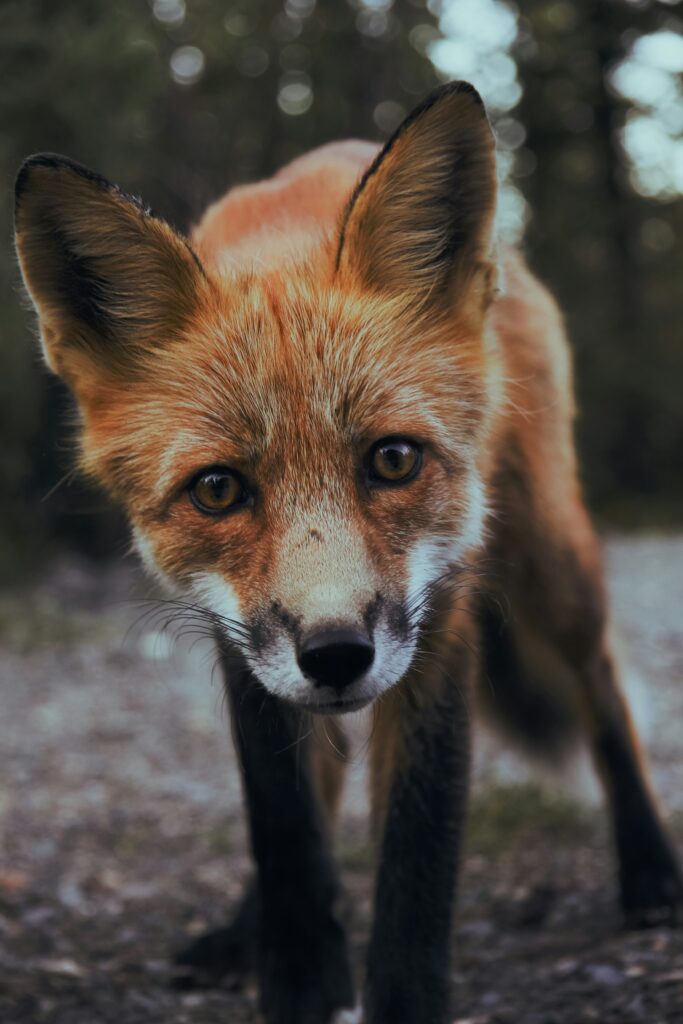
How: Use mystery clue bags with textures (feather, fur, etc.), invite movement imitation, and discuss each animal’s special qualities (hawk’s eyes, fox’s silent paws, elk’s strength). - LS 3: Animal Charades – Movement Exploration
Goal: Embody and express understanding.
How: In small groups, students act out animals while peers guess and describe the traits they observed. Capture key words and drawings together. - LS 4: Observation Walk (Outdoors)
Goal: Practice quiet, focused observation.
How: Students take journals and clipboards outdoors. Prompt: "Observe like a hawk, move like a fox." After 10 mins, circle up to share what they saw, heard, and wondered. - LS 5: Animal Art – Portraits with Qualities
Goal: Reflect and create.
How: Students draw or paint their favorite Wasatch Back animal. Add descriptive words about the animal’s traits. Display the artworks for a gallery-style walkthrough. - LS 6: Circle Share & Story Weaving
Goal: Reflect and synthesize.
How: Students present their animal portraits and share one thing they learned. Then, co-create a short fable where the animals teach each other something wise.
📦 Materials Needed
- Story map or projected drawing
- Clue bags with feathers, fur, etc.
- Animal photos or cards
- Art supplies (crayons, pencils, watercolor)
- Clipboards and nature journals
🧹 Standards Alignment
- Science (SEEd 2): 2.2.1, 2.3.1, 2.3.2
- ELA: SL.2.1, W.2.3, RL.2.2
- Visual Arts: Create and present expressive artwork
📚 References
- Mardell et al., A Pedagogy of Play
- Cornell, J., Sharing Nature with Children
- Kuo et al., Frontiers in Psychology
🌲 Appendix
A. Willa’s Journey
Willa pushed open a creaky gate and stepped into the sweet spring air, her heart fluttering with excitement. In one hand she held her Nature Detective Notebook; in the other, her smooth river stone—ready for magic rubbing tricks.
She knelt by a patch of iris blooms where little striped frogs hopped. Reaching for her pencil—snap! It broke. Undeterred, Willa pressed her stone beneath a bright leaf and rubbed gently until the leaf’s veins appeared on the page.
Under a whispering aspen grove, a red‑tailed hawk drifted off, leaving a single tail feather caught on a branch. Willa plucked it carefully, laid it flat in her notebook, and used her stone in small circles to capture every strip and notch.
By the bubbling stream, she spotted a neat beaver dam. Its builders had chewed sticks sharp as spears. Willa pressed paper over a chewed stick and rubbed it to reveeal the pattern of ridges from the beaver's teeth.
Soft crackles in the underbrush revealed a red fox. Remembering to move like a fox herself, Willa crouched low, crept forward, and gently pressed paper over its paw track in the soft soil, then gently rubbed over it with a dirt-covered finger. The tiny pads and claws emerged.
As dragonflies zipped above the water, one landed on the corner of her open notebook. Willa held her breath, traced the shadow of its wing with her pencil stub—careful not to disturb her guest—and watched the delicate network of veins appear in fine lines.
When the sun dipped low, Willa flipped through her pages—frog toes, leaf veins, hawk feathers, beaver tail prints, fox tracks, and dragonfly wings—all captured with curiosity and cleverness. With a happy sigh, she skipped back through the gate, eager to share her discoveries with everyone at school.
B. Outdoor Learning Tips
- Prepare
- Establish clear outdoor signals
- Discuss expectations before heading outside
- Invite silence and wonder; allow questions even if they do not seem to be on-track for the lesson.
- Take time to reflect. If possible, find a place that feels right for settling down for discussion.